The Anti-Racist Festival and “Our Sea”: The Mediterranean Offering Hope or a Tomb?

“Say
NO to Racism,” urged a banner decorated with multi-colored handprints and a
peace sign outside the People’s Peace and Friendship Park in Chania, next to
another banner announcing the 9th Annual ΑΝΤΙΡΑΤΣΙΣΤΙΚΟ ΦΕΣΤΙΒΑΛ, or
Anti-Racist Festival, with this year’s theme of “mare nostrum, η θάλασσά μας,”
our sea. On the last Sunday in June, my Greek friend K and I entered the park,
passing a well-attended interactive children’s theater activity on the grass
under tall trees, with an open children’s chess tournament underway on tables
and plastic chairs across from it. Seeking an overview of the festival, we
walked past some of the scores of informational stalls before returning to talk
with some of the volunteers staffing them. We passed stands selling sweets and
drinks, struggled to hear people talk over loud music blaring from large
speakers, and noticed alluring Middle Eastern food in a sort of outdoor food
court equipped with dozens of tables and chairs. We passed tables filled
with leftist books for the taking, others piled with photocopies about
revolutionary theory, more with booklets and pamphlets about Doctors of the
World, a group that helps addicts, and other topics, plus a few tables filled
with free clothes, to which we added some clothing and children’s books.

We
passed photo and art exhibits set up along the park’s pathways, with small
paper boats related to the festival’s theme of “our sea”—the
Mediterranean—strung up above the walkway, perhaps to emphasize the fragility
of the vessels in which so many migrants travel to Greece. Some of the paper
boats had turned on their sides and begun to come apart, as if to remind us
that real migrants’ overloaded inflatable boats too often capsize, leading to
either rescues or—in hundreds of cases just this year—drownings. One festival discussion focused on the Mediterranean Sea
as the "watery tomb
of refugees and chemical
weapons," and while time and language constraints
prevented me from following it, more easily translatable advance press releases
include many of the points likely to have been made there. For example, the
festival organizers partially echoed major human rights organizations in
arguing that “Europe
has turned into a fortress. Its policies keep the borders closed and fill the
Mediterranean with sinking boats and dead immigrants, destroying any dreams for
a decent life. The war in Syria is continuing and is sending refugees by the
thousands. The chemical weapons used in the war and sold by Western
governments, after killing thousands of innocent civilians, will now be hydrolyzed
and dumped in our Sea." The authorities
deny that any remains of chemical weapons will end up in the Mediterranean, and
I can only hope that is true, and hope no accident will allow any leaks or
spills, since this is where my children swim, along with millions of other
people. However, no one denies that many migrants and refugees drown as they
attempt to reach safety in Europe, and human rights groups protest what
festival organizers describe as “illegal deportations, concentration camps, the Evros fence … [and] the
bureaucratic maze for asylum
seekers [which] constitute a
continuing crime against human
life and dignity." If you had come from
Syria or Iraq, you’d know what they’re talking about.
Imagine Fleeing Syria or Iraq
Imagine
living in Syria or Iraq and fleeing your hometown with your children, leaving
behind nearly everything you own, and everyone and everything you have ever
known, trying to rescue your children from bombs and bullets, trying to reach a
country where your children can survive, learn, and flourish. Imagine fleeing
on foot, making your way to a smuggler of human beings who promises to take you
to a safe country if you give him nearly all the money you could scrape
together, at least a thousand euros. Imagine that the smuggler tells you and
your children to walk and walk until you’re exhausted, crowds you all onto a
packed bus, tells you to board a small, shabby boat, then packs more and more
people in next to you, until you think the boat will sink. Imagine setting off
into the Mediterranean Sea, which looks nothing like the postcards of Greek
beaches, but more like the Atlantic Ocean, an endless sea of waves that
threaten to engulf your overloaded boat and drown your children, as it may well
do on a windy day. Imagine traveling on the boat for many hours, crowded in
with your crying children and dozens of other worried people, terrified of the
vast sea and the boat’s rocking, with too little food and water, no toilet, too
little space. Imagine sighting land and being pushed off onto even smaller, more
overloaded, less seaworthy inflatable boats and told to get to shore without a
captain. (Here is a photo of such a boat--at the link, not below. Think about how well it would fare in
high waves.)

Do
you find that hard to imagine? I do. I can imagine
it happening to myself now, having read and heard the videotaped stories of a
number of migrants, refugees, and asylum seekers who lived through a very
similar journey, without ever believing that it really could happen to me (see e.g. Doctors Without Borders, and for some videos in
English, not just about Greece, see the UN Refugee Agency Stories page). But I cannot even envision
my children in such a situation; nor
do I want to push myself far enough to try. I do not want to have nightmares
about that. However, such a nightmare is the reality for thousands—if not
millions--of refugees and migrants, many of them parents, all of them sons or
daughters. While many are much luckier, others do not feel they have the option
of protecting their children from such a horror story, since they face even
greater threats in their homeland; they can think of no choice but to try to live
through such a journey if they want to give their children a chance to survive
and thrive.
The Reality for Refugees and Migrants in Greece
 That
is the true story of thousands of refugees, asylum seekers, and migrants who
have fled Afghanistan, Syria, Iraq, Pakistan, Morocco, Algeria, and other
countries in North Africa, the Middle East, and Asia in search of a safe
European country where they can build a better life. Since the Greek government
completed construction of a four-meter high, 12.5 km long barbed wire fence in
the northeastern region of Evros in December 2012, the land border between
Turkey and Greece which is not demarcated by the Evros River has been cut off
as the major route into Europe. This has drastically reduced the number of
migrants crossing into Greece at that point, but like any fence, it does not
stop movement; it just slows it down or pushes it in a different direction. Now
desperate migrants embark on a dangerous sea journey. Many have been turned
back by the Greek coast guard while still at sea, while others have been saved
by the coast guard or fishing vessels, although recent outcries over mass
drownings in the Mediterranean may be turning the tide toward more strenuous
rescue efforts and an end to pushbacks away from European soil. The Italian
Navy’s major rescue effort, called “Mare Nostrum” like the Anti-Racist
Festival’s theme, has set a more humanitarian example.
That
is the true story of thousands of refugees, asylum seekers, and migrants who
have fled Afghanistan, Syria, Iraq, Pakistan, Morocco, Algeria, and other
countries in North Africa, the Middle East, and Asia in search of a safe
European country where they can build a better life. Since the Greek government
completed construction of a four-meter high, 12.5 km long barbed wire fence in
the northeastern region of Evros in December 2012, the land border between
Turkey and Greece which is not demarcated by the Evros River has been cut off
as the major route into Europe. This has drastically reduced the number of
migrants crossing into Greece at that point, but like any fence, it does not
stop movement; it just slows it down or pushes it in a different direction. Now
desperate migrants embark on a dangerous sea journey. Many have been turned
back by the Greek coast guard while still at sea, while others have been saved
by the coast guard or fishing vessels, although recent outcries over mass
drownings in the Mediterranean may be turning the tide toward more strenuous
rescue efforts and an end to pushbacks away from European soil. The Italian
Navy’s major rescue effort, called “Mare Nostrum” like the Anti-Racist
Festival’s theme, has set a more humanitarian example. 
Both
leftist and anti-racist organizations within Greece, and international human
rights groups such as Amnesty International, Human Rights Watch, Doctors
Without Borders, and Doctors of the World, as well as the Council of Europe’s
commissioner for human rights, have severely criticized the Greek and European
governments for their inadequate responses to the needs of migrants, especially
asylum seekers. They have been particularly critical of reported pushbacks of
people sent away from Greek territory without an asylum hearing, and of
horrific conditions in migrant detention camps. However, those who criticize
the Greek authorities for seriously flawed laws, policies, implementation, and
facilities for migrants and refugees—and certain Greeks for their racist and
xenophobic words, acts, and voting--do not stop there. Acknowledging that the
Greek economy, which is in its worst state of recession (or depression) ever in
peacetime, with almost 27% unemployment, is ill suited to help needy people
from other countries when it is failing millions of newly impoverished Greeks,
rights groups call on the European Union (EU) to take on more responsibility
for migrants entering Europe at its periphery.
 So
far, even the latest manifestation of the Dublin Regulation for refugees,
Dublin III, continues to decree that asylum seekers entering Europe should have
their requests processed by the European country they first enter. That
obviously puts a greater burden on countries such as Greece which are closest
to the lands from which many refugees flee--an unfair and unmanageable burden
for a small, struggling country. EU budgets do not reflect this reality by
providing adequate funding to help Greece treat migrants with humane
sensitivity, although they do seem to reflect a desire to keep out as many
needy migrants as they can by increasing coast guard and border patrols,
building more walls, and pushing would-be migrants back where they came from,
as Amnesty International and others report: “The EU Commission allocated
€227,576,503 for Greece to keep refugees and migrants out from 2011 until the
end of 2013; but only €19,950,000 to assist their reception during the same
period” (Greece: Stop unlawful and shameful expulsion of refugees and migrants; see also Human Rights
Watch’s Europe’s Spectacle of Compassion for Migrants). Meanwhile, Greece
struggles with too many people from crisis points in the Middle East, Africa,
and Asia who are trying to escape to Europe. And Greece fails to provide a safe
haven for them.
So
far, even the latest manifestation of the Dublin Regulation for refugees,
Dublin III, continues to decree that asylum seekers entering Europe should have
their requests processed by the European country they first enter. That
obviously puts a greater burden on countries such as Greece which are closest
to the lands from which many refugees flee--an unfair and unmanageable burden
for a small, struggling country. EU budgets do not reflect this reality by
providing adequate funding to help Greece treat migrants with humane
sensitivity, although they do seem to reflect a desire to keep out as many
needy migrants as they can by increasing coast guard and border patrols,
building more walls, and pushing would-be migrants back where they came from,
as Amnesty International and others report: “The EU Commission allocated
€227,576,503 for Greece to keep refugees and migrants out from 2011 until the
end of 2013; but only €19,950,000 to assist their reception during the same
period” (Greece: Stop unlawful and shameful expulsion of refugees and migrants; see also Human Rights
Watch’s Europe’s Spectacle of Compassion for Migrants). Meanwhile, Greece
struggles with too many people from crisis points in the Middle East, Africa,
and Asia who are trying to escape to Europe. And Greece fails to provide a safe
haven for them. Humanitarian Responses to Human Needs

One
of the humanitarian organizations trying to alleviate the problems of both
migrants and impoverished Greeks is Medecins du Monde Greece, or Doctors of the
World, which I learned is separate from Doctors Without Borders, with its local
branches tending to be more autonomous, but similar in providing free medical
care and medicine to those who cannot afford them, as well as advocating for
human rights and fighting against racist and xenophobic actions alongside the
Greek Council for Refugees. Back at the Anti-Racist Festival, I had a very
informative discussion (in English) with a Lebanese agricultural engineer who
volunteers with Medecins du Monde Greece. He told me that when its Chania
branch was founded eight years ago, it helped 5 to 8 people without health
insurance or money to pay for doctors or medicines each month, but now it helps
up to 30 per day. Initially, the clients were not Greek. Now, 35% of those
seeking help are Greek, since more and more Greeks have become impoverished
during the economic crisis here, the state welfare system no longer provides
adequate aid to the needy (including the unemployed), copays for insured
medications have increased from 10% to 25-50%, and in some cases even more, far
beyond what reduced pensions enable impoverished seniors to afford, if they
even have health insurance. Many of the foreign-born clients are Bulgarians,
Moroccans, and Albanians (groups that together, says the agricultural engineer,
make up about 80% of the non-Greeks in Chania now); others are Algerians,
Tunisians, Egyptians, and Central Africans. Medecins du Monde helps as many as they can, but they
have no sponsorship from big companies, banks, or the government now; relying
on individual donations and fundraisers, they can’t afford too much, and they
prioritize purchases of children’s vaccines, since those are never donated,
while other medications are.
 In
Medecins du Monde – Greece’s National Report on Racist Violence, published in April of this year, Psychiatry Professor Nikos Tzavaras emphasizes the importance of combating
“xenophobic prejudice” which often leads to “the demonization of the
[so-called] dangerous race” and “violence and aggressiveness” against people
viewed as different. He suggests that we start by fostering “the understanding
of problems and of cultural particularities of the immigrants in Greece, mainly
in order to highlight the similarities between them and the local population.
The persistent effort to identify with them enhances the solidarity toward them
and assists the effort of various organisations involved in the assistance of
immigrant population[s]” (33, 36). This is what I am trying to do here: to
emphasize the shared humanity, the similar basic needs and desires, of everyone
I’m writing about, even in the face of drastically different situations. This
is also what I’m learning about this summer in more detail than ever before.
In
Medecins du Monde – Greece’s National Report on Racist Violence, published in April of this year, Psychiatry Professor Nikos Tzavaras emphasizes the importance of combating
“xenophobic prejudice” which often leads to “the demonization of the
[so-called] dangerous race” and “violence and aggressiveness” against people
viewed as different. He suggests that we start by fostering “the understanding
of problems and of cultural particularities of the immigrants in Greece, mainly
in order to highlight the similarities between them and the local population.
The persistent effort to identify with them enhances the solidarity toward them
and assists the effort of various organisations involved in the assistance of
immigrant population[s]” (33, 36). This is what I am trying to do here: to
emphasize the shared humanity, the similar basic needs and desires, of everyone
I’m writing about, even in the face of drastically different situations. This
is also what I’m learning about this summer in more detail than ever before. A Haven for Unaccompanied Refugee Boys

At
the Anti-Racist Festival—where I learned a lot--I was impressed by a group of
posters bearing colorfully handwritten, sometimes illustrated poems by refugee
boys living at the Ξενώνας ανήλικων προσφύγων Ανωγείων, the Center for
Unaccompanied Underaged Asylum Seekers in Anogia, near Rethymno in Crete. The
poems had been written in several languages and alphabets, including Arabic,
French and Farsi, with some also translated into Greek, but aside from the
languages, they remind me of similar projects completed in American grade
schools, where written self-expression was (in my experience) encouraged. These
poems seem to express love for people who are far away. One of the boys had
written his name in Greek on both the original and the translation, and proudly
circled it. Some of the boys were waiting to sing their native songs at the
Festival. Since the refugees were minors, K and I had turned to their teacher
and director for information, but before we left I commented to one of the boys
that I was sure he knew better Greek than I did, and his teacher assured me
that he’d picked it up in just three months. (Ah, the minds of the young!) I
was not the first American they’d met; I was surprised to meet two of the
psychology or social work students from Drexel University in the U. S. who come
to the center each year as part of a 6-month internship at the refugee center.

The
teacher and director of the center told K and me (in English and Greek) that
the center houses 25 boys from Afghanistan, Pakistan, Bangladesh, Congo,
Nigeria, and Syria who left their homeland without their parents or were separated
from them after leaving, and have applied for asylum in Greece. Since 2000,
this center has housed 400 boys, including some as young as 9 years old, with many
around 12 or 13 on arrival. Accepted based on their own claims of refugee
status, the boys live at the center until they’re 18. They are generally
political or war refugees, often from areas with civil war or violence by the
Taliban, some fleeing in order to avoid being forced to become child soldiers. They
enter Greece through Turkey, on foot or by boat or plane. The police bring them
to the center from all over Crete (since it’s the only one of its kind on the
island). There are several centers in other parts of Greece (funded by the
Greek Labor Ministry and—mostly--the European Refugee Fund), but there’s not
enough room for all the boys who could use them, and many end up on the streets
or in detention centers or jails. The Anogia center provides legal, social, and
psychological services, as well as lessons in the Greek language and culture, drama,
and other subjects. Some of the boys attend the regular Greek school in the
village after they learn some Greek, but many didn’t go to school in their home
country and can’t read or write in their native language, so they are not all
prepared for Greek school.
My New “Minority” Status and Broadened Horizons

Over
the last few years, I’ve learned about the centers for unaccompanied underage
asylum seekers in Greece, as well as educating myself about the problems facing
impoverished migrants and refugees who seek a better life in or beyond Greece (via
news articles, discussions with Greeks, human rights organizations’ reports,
and interviews with migrants in Greece). This knowledge has changed the way I
think about unaccompanied minors entering the southwestern U. S. from Central
America, hoping for a better life in a country with less crime, hoping for more
leniency from the U. S. government as children in need. Of course I knew that
Latin Americans migrate to the U. S., some of them without legal documentation,
but since I’ve become an immigrant myself and learned about other migrants’
situations, the American situation looks different. I think I can better
understand what’s going on, at least when I hear of certain American citizens,
mayors, and churches providing compassionate support for exhausted migrants, although
I don’t understand how other Americans can seriously argue that the humane
thing to do is to return Central American children to countries full of gang
violence and murder. Being a minority—even one of the most privileged, least
visible ones with the same color skin and not such different hair or features
from the majority—can be an educational experience for someone born to a life
of middle-class, white American privilege. I certainly don’t claim to fully
understand what other minorities experience, or what it’s like to be a victim
of racism due to the color of one’s skin or classism due to one’s socioeconomic
background or even, totally, ethnocentrism due to the accident of one’s
ancestry. But I think my cultural differences from Greeks, and especially my
(daily, continuing) realization of how it feels to struggle to communicate in a
language foreign to me, have enabled a deeper sort of learning about some of
that.
 For
example, my experiences here have made it crystal clear to me that someone’s
inability to speak well in a language foreign to her does not prove that she is
stupid or less deserving of respect than anyone else. I know I often sound
stupid to Greeks when I try to speak their
language, and I know that those who are not open to getting to know me will not
really understand much about me, and are less likely to respect me, if they do
not speak English. I feel the impatient dismissal of certain salespeople and
public servants, albeit far less frequently than many migrants. On the other
hand, those who are willing to take the time and trouble to understand me—my
children’s friends’ mothers, neighbors, and some friends of friends, for
example—can begin to do so, and let me get to know them, if they are very
patient with my still-elementary Greek language skills. (This is the kind of
patient compassion more of the world needs to extend to more of the world.) I
am becoming too ashamed to say I’ve been living here for 11 ½ years without
learning proper Greek and have resolved to resume the language studies I
abandoned in frustration at my slow progress years ago. (Yes, I know; it’s
about time.)
For
example, my experiences here have made it crystal clear to me that someone’s
inability to speak well in a language foreign to her does not prove that she is
stupid or less deserving of respect than anyone else. I know I often sound
stupid to Greeks when I try to speak their
language, and I know that those who are not open to getting to know me will not
really understand much about me, and are less likely to respect me, if they do
not speak English. I feel the impatient dismissal of certain salespeople and
public servants, albeit far less frequently than many migrants. On the other
hand, those who are willing to take the time and trouble to understand me—my
children’s friends’ mothers, neighbors, and some friends of friends, for
example—can begin to do so, and let me get to know them, if they are very
patient with my still-elementary Greek language skills. (This is the kind of
patient compassion more of the world needs to extend to more of the world.) I
am becoming too ashamed to say I’ve been living here for 11 ½ years without
learning proper Greek and have resolved to resume the language studies I
abandoned in frustration at my slow progress years ago. (Yes, I know; it’s
about time.) 
However,
even now, many Greeks go beyond patience with my lack of fluency; some treat me,
in my privileged state as the wife of a Greek professor, like family. My
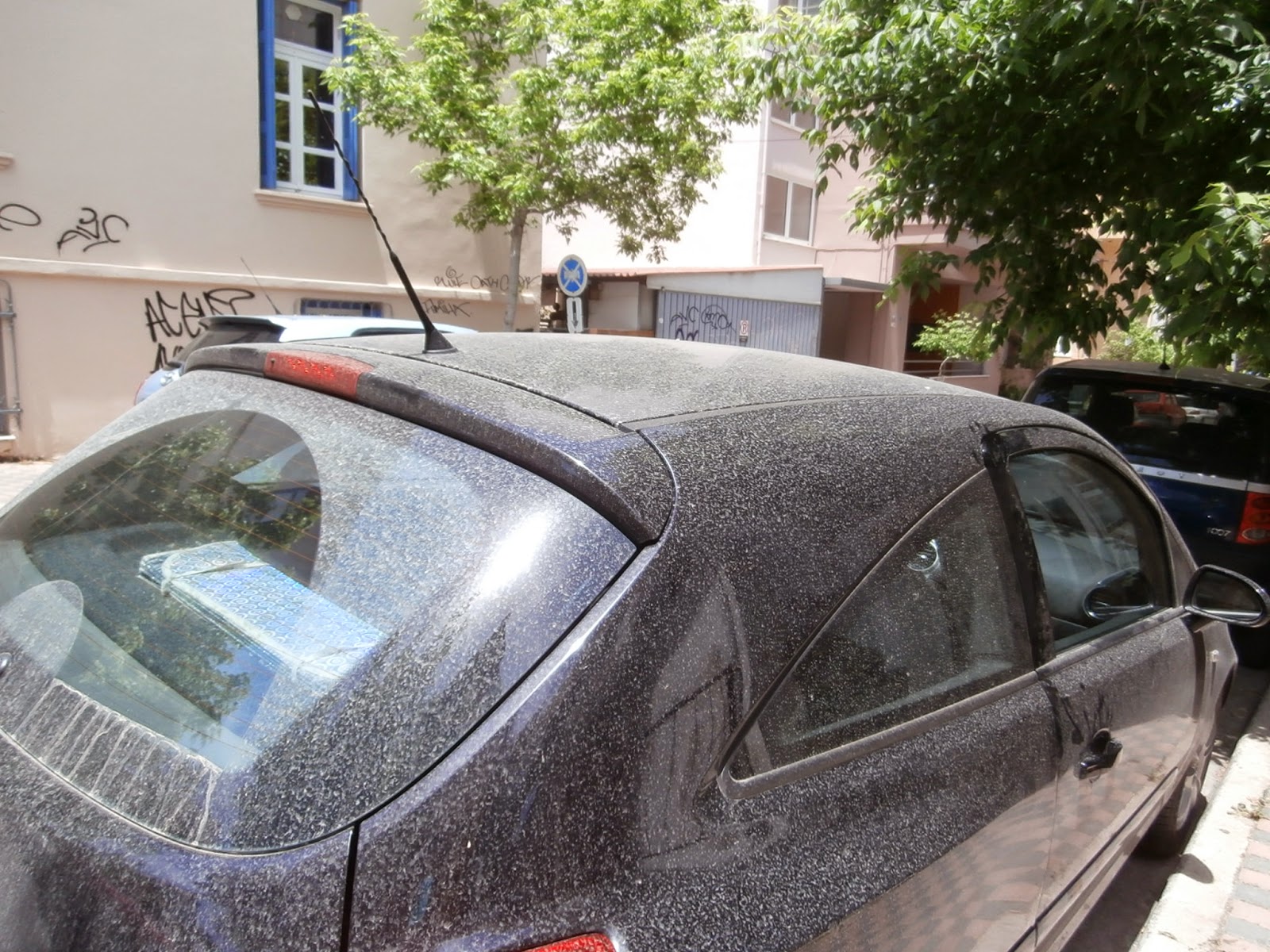
landlady washed my car for me after it rained mud and invited me to harvest
spearmint and greens from her garden any time. A friend’s grandmother made my
daughter the 1970s-style skirt she needed for their end-of-school program and
refused any money for her work. A friend gave me some little basil plants, for
the second time this year. The neighbors, teachers, mail carrier, organic store
owner, toy store clerk, and grocery clerks take time to chat with me about the
everyday things I am able to discuss in Greek. I’m part of the community
here—more than I’ve ever been since I left my childhood neighborhood in
Pennsylvania. If I end up leaving Greece, I will have mixed feelings about my
new uprooting. There are good things and bad things everywhere, as I tell
everyone who asks how I like it here. While some less fortunate migrants have
suffered more intensely than I can imagine from the bad, including the racism
and xenophobia, here, others have told me they also feel much as I do—part of
the community (more or less).

 One
of the good things here is the extent of the effort to overcome prejudice and
hatred, and to help the less fortunate—as many Americans also do. The Anti-Racist Festival was actually much more than its name
implies: it was also leftist, ecologist, humanitarian, pacifist, and more, with
music, art, dance, photography, documentary films, lectures, and more than 60 information stands related to (for example)
homelessness, addiction, desertification, water rights, the hydrolization of
chemical weapons in the Mediterranean, recycling, and refugees and migrants
from Afghanistan, Congo, Philippines, Syria, the Eastern
Mediterranean, and elsewhere. I noticed a clever slogan
on a banner: ΑΝ ΤΟ ΠΕΡΙΒΑΛΛΟΝ ΗΤΑΝ ΤΡΑΠΕΖΑ ΘΑ ΤΟ ΕΙΧΑΝ ΗΔΗ ΣΩΣΕΙ, or IF THE
ENVIRONMENT WERE A BANK, THEY WOULD HAVE ALREADY SAVED IT. And an idealist’s
hope: ΕΞΩ Ο ΠΟΛΕΜΟΣ ΑΠΟ ΤΗΝ ΙΣΤΟΡΙΑ, or TAKE THE WAR OUT OF HISTORY. This major
event had attracted 2000 visitors the previous day without any corporate or
government funding, and while a Greek World Cup game probably decreased the
turnout that Sunday night, more people were arriving, Greek fashion, as
darkness began to approach and the air cooled down. Even in a conservative/
centrist Greek paper, journalist and editor Nikos Konstandaras reminds us, “In
this day and age…. Every conflict can reach us, whether we are spectators at
the Boston marathon, whether we are flying 10 kilometers above ground, whether
we hear about the plight of refugees and choose to forget that until recently
they lived lives like ours. Every war is now our war. And every refugee is one
of us (Death on MH17 and our global war). They’re one of us:
they’re human, too. We can’t just push them back, lock them up, send them and
their children away to suffer or die in places we’d never take our own
children. Yes, we have our own problems in our own countries, we have
native-born people struggling to make ends meet, but what religion, what human
being, could condone such locking up or sending away? Think about it.
One
of the good things here is the extent of the effort to overcome prejudice and
hatred, and to help the less fortunate—as many Americans also do. The Anti-Racist Festival was actually much more than its name
implies: it was also leftist, ecologist, humanitarian, pacifist, and more, with
music, art, dance, photography, documentary films, lectures, and more than 60 information stands related to (for example)
homelessness, addiction, desertification, water rights, the hydrolization of
chemical weapons in the Mediterranean, recycling, and refugees and migrants
from Afghanistan, Congo, Philippines, Syria, the Eastern
Mediterranean, and elsewhere. I noticed a clever slogan
on a banner: ΑΝ ΤΟ ΠΕΡΙΒΑΛΛΟΝ ΗΤΑΝ ΤΡΑΠΕΖΑ ΘΑ ΤΟ ΕΙΧΑΝ ΗΔΗ ΣΩΣΕΙ, or IF THE
ENVIRONMENT WERE A BANK, THEY WOULD HAVE ALREADY SAVED IT. And an idealist’s
hope: ΕΞΩ Ο ΠΟΛΕΜΟΣ ΑΠΟ ΤΗΝ ΙΣΤΟΡΙΑ, or TAKE THE WAR OUT OF HISTORY. This major
event had attracted 2000 visitors the previous day without any corporate or
government funding, and while a Greek World Cup game probably decreased the
turnout that Sunday night, more people were arriving, Greek fashion, as
darkness began to approach and the air cooled down. Even in a conservative/
centrist Greek paper, journalist and editor Nikos Konstandaras reminds us, “In
this day and age…. Every conflict can reach us, whether we are spectators at
the Boston marathon, whether we are flying 10 kilometers above ground, whether
we hear about the plight of refugees and choose to forget that until recently
they lived lives like ours. Every war is now our war. And every refugee is one
of us (Death on MH17 and our global war). They’re one of us:
they’re human, too. We can’t just push them back, lock them up, send them and
their children away to suffer or die in places we’d never take our own
children. Yes, we have our own problems in our own countries, we have
native-born people struggling to make ends meet, but what religion, what human
being, could condone such locking up or sending away? Think about it.Acknowledgements:
Many thanks to the Greeks and migrants who helped me gather information for this blog, including the volunteers who put so much time into an impressive Anti-Racist Festival, and to the Americans who commented on a draft of part of this text.
SELECTED ADDITIONAL LINKS FOR MORE INFORMATION
ABOUT MIGRANTS IN GREECE
ASYLUM
This February article suggests some improvement in the
processing of applications for asylum, especially for refugees from Syria and Somalia.
REFUGEES
UNHCR Tracks
The UN Refugee Agency has produced videos and reported on interviews with Syrian refugees in Greece, as well as others.
PUSHBACKS
Greece: Stop unlawful and shameful expulsion of refugees and migrants
Amnesty International strongly condemns the common practice of “pushbacks” by Greek officials, the illegal and inhumane expulsion of migrants before they can enter the country to request asylum.
DETENTION
Greek State Legal Council justifies detention pending removal beyond 18-month limit set by EU Return Directive
RACIST VIOLENCE
African migrants face 'impossible' life in Greece
This is a very upsetting overview of a horrible, impossible situation for dark-skinned immigrants in Athens in 2012, where they faced discrimination, racial slurs, beatings, and imprisonment but were not allowed to head to different parts of Europe.
Against Racism
HUMAN RIGHTS
Greece: Human Rights Watch Submission to the United Nations Committee against Torture
The Human Rights Watch page on Greece