Constant Change, But Is Anything Really Different?

Greek
political and economic news is too boring to remind most people who don’t live
here of an old-fashioned rollercoaster ride’s ups and downs, but from where I
sit on the island of Crete in Greece, it’s been a bumpy month. The news was full
of twists and turns in the policy and strategy of Prime Minister Alexis Tsipras’s
new leftist government, along with changing stock market reactions and varying forecasts
of the likelihood of a Grexit (in which Greece would leave the Eurozone to
return to the drachma). No one I talked to here was sure what to think, with
Greek and European politicians talking compromise some days and refusal to
compromise other days, the leftist SYRIZA government saying they’d fulfill
their campaign promises some days and might not on other days. Reluctantly
pushing myself through the required routines of daily life while under attack
by three of the many viruses circulating here, I’ve been both relieved to sink
into my desk chair for sedentary distraction from my symptoms, and struck with
anxiety as hopes here rise and fall. And now it feels like Greece is facing a
steep uphill climb. Most Greeks can’t escape this, lacking the foreign job,
connections, and money to get away. As one working mother said, “We started the
dance, now we have to dance it”—whether or not we were in charge of telling the
dancers what to do.

February
began with a dust storm in Crete, then shifted between warm southerly winds and
cold northerly gusts, mild sunny days and rainy, sleety periods with
temperatures almost down to freezing even here near sea level, and the Cretan
mountains filled with snow. By the end of the month, we were back to the strong
warm, dusty southerly winds, the wildly waving olive branches, and sea mists
blowing above whitecapped waves so boats stayed in port and delayed their
deliveries to Crete. The question is whether we were also back to the same old
story of a detested bailout program imposed by the troika of the European
Commission, the European Central Bank, and the International Monetary Fund that
we’ve been hearing for years now.

Many of us
in Greece (and elsewhere) have been frustrated by the stubbornness of German
Finance Minister Wolfgang Schaeuble and his allies, who refuse to acknowledge
what so much of the world does—that austerity has not worked in Greece, that it
is unjust to continue punishing ordinary Greeks to save the banks, and that a
different solution is needed here. Commentators disagree on whether Prime
Minister Alexis Tsipras and finance minister Yanis Varoufakis have really
gained anything substantial for Greece. Nobel Laureate Paul Krugman saw “an
unholy alliance … between left-leaning writers with unrealistic expectations
and the business press, which likes the story of Greek debacle because that’s
what is supposed to happen to uppity debtors.” But according to Krugman, who
disagrees with both the angry, disappointed leftists and the disgusted
conservatives, “there was no debacle. Provisionally, at least, Greece seems to
have ended the cycle of ever-more-savage austerity” (What Greece Won).
Most of us
here seem to think that remains to be seen. A gas station
attendant I spoke with believes things will continue to be difficult but
figures we’ll know what’s going to happen in about five months. He was probably
thinking of Prime Minister Tsipras’s “bigger goal … to deliver
quickly on reforms to earn credibility so the government can negotiate a new
bailout agreement in June, with terms more favorable for Greece” (In Greek Crisis, Rare Moment of Consensus). I was sorry that SYRIZA was asked to give up on so much of what it had
promised voters, and upset that Greece had yet again been pushed to prioritize
banks and creditors rather than struggling people. Many who voted for SYRIZA
expecting substantial change are even more sorry—or angry. But Krugman insists,
“If you are angry that the negotiations didn’t make room for a full reversal of
austerity, a turn toward Keynesian fiscal stimulus, you weren’t paying attention. The
question instead was whether Greece would be forced to impose still more
austerity” (What Greece Won). At least, he says, Greece didn’t
get that—for the moment.
No one
thinks Greece’s problems have been solved. It’s clear that the government has a
tough road of reforms and negotiations ahead of it and that Greeks will see
very limited improvement in their situation, if any, in the near future, since
the government cannot afford to offer much help to struggling people. So an
unemployed Greek mother outside a local supermarket expects no help from the
state, and instead begs her fellow citizens for food for her children since she
has lost her job in a shoe store. Greece may be allowed to run a lower primary
surplus (before debt payments), which could provide some money for relief for
the needy. The government might gain some leeway by collecting unpaid taxes,
especially from wealthy tax evaders, and fighting corruption and tobacco and
oil smuggling, all of which could bring in desperately needed income.

SYRIZA
calls the troika “the institutions” now and writes of an “agreement” rather
than the hated old “program” or “memorandum” signed by earlier
governments—changing the terms--and it did manage to make some of its own
decisions about which reforms to focus on. So some agree with Prime Minister
Tsipras that SYRIZA won the battle, if not the war. But others say SYRIZA did a
U-turn and completely gave in to the other Europeans, led by Germany and other
austerity-loving governments such as Portugal and Spain who fear for their own
political futures, which could be jeopardized if Europe really made changes to
prioritize regular children, women, and men instead of banks and creditors.
(For different views, see for example Greek reform list to comprise mainly structural actions, says gov't and A Deal That Preserves Greece’s Place in Eurozone, and Fiscal Restraints, as well as The unlikely winners of Greece's surrender on euro.)
Support for SYRIZA: Still (More or Less) Strong in Greece

I am
concerned that some of SYRIZA’s proposals, for example regarding universities,
may be counterproductive, others may be impossible to implement in the foreseeable
future, and others may be inadequate. (No one talks of abolishing the
wastefully expensive system of after-school private schools, or frontistiria,
that compensate for known deficiencies in public education—it seems impossible
to dismantle such a well-established institution that employs so many.)
Nevertheless, SYRIZA is growing on me, which seems to be the case with many
here. Even the conservative-centrist Greek daily Kathemerini praised the new government’s flexibility and criticized
the Germans’ refusal to acknowledge that the European situation has changed (Stubborn but not almighty).

During
February, SYRIZA supporters were demonstrating in support of the government,
for a change. After the agreement with the Eurogroup to extend the bailout
program with some changes, several hundred far(ther) leftists did protest the
government’s actions, and there was some violence after the march, but that was
a small demonstration compared to what Greece has seen in recent years. Some
disappointed, angry leftists have criticized Prime Minister Tsipras so harshly
that there’s been talk of the most radical elements of SYRIZA withdrawing their
support for him. But recent polls show SYRIZA with 41-42% approval ratings
overall, with the previous governing party, conservative New Democracy, in
second place with only 18-19% ready to vote for them in an imaginary election.
An astonishingly positive poll just after Greece signed the Eurogroup agreement
showed 68% of respondents “satisfied with Greece’s negotiations with Europe”
and 76% viewing “the government’s course as positive so far.” 55% considered
Alexis Tsipras “more suitable for Prime Minister” than Greece’s previous
leader, Antonis Samaras, who received just 13% of the votes (New Poll: SYRIZA has Comfortable Lead Over New Democracy).

However, a
slightly later poll hints at less enthusiasm: “after the final negotiations [with
the Eurogroup] and a four-month extension deal, 43.3% of those polled view the
situation as getting worse, with only 15.9% of respondents saying they were
optimistic about the country’s future,” and “39.1% of respondents said things
are ‘neither good nor bad’” (New Greek Poll: SYRIZA 41.3%, New Democracy 19.2%). On February 25, “it was stock and
bond markets that reacted more positively, while Greeks appeared more subdued
about the outcome” (Greece gets warnings from creditors, now comes hard part). That is not surprising; nor are the most recent, mixed poll results.
Things look better, for the moment, for investors and banks, but to regular
citizens and immigrants it’s not so clear. A young psychologist doesn’t know
what will happen but keeps hoping: “I trust them; they’re not thieves like the
other politicians.” On the other hand, a social worker and mother is “worried.
I voted for them. I’m not SYRIZA, but I wanted a change. But now I don’t know.
If it doesn’t get better, those of us who want a better life for our children
will have to find somewhere else to live.”
No Tie, Untucked Shirt: The Significance of Style
Greeks’
tension was sometimes alleviated by press attention to SYRIZA leaders’ refusal
to wear ties and finance minister Yanis Varoufakis’s habit of leaving his shirt
untucked. Some Greeks seem to be proud of the bold independence of these rather
daring gestures on the European political stage, although one of my elderly
neighbors seemed horrified by it, asking me whether anyone had ever seen such a
thing before. In any case, even those who pay little attention to political or
economic developments noticed Greek leaders’ clothes as the leftists rebelled
against a more conservative world order stylistically and hence symbolically as
well as politically. “Varoufakis becomes unlikely heartthrob in Germany,” announced a headline last month. Unlikely heartthrob, indeed—and does it
do any good if some ordinary Germans are attracted to the Greek finance
minister, if the German Prime Minister and finance minister are dead set
against him?
A German
satire video from NEO MAGAZIN ROYALE that had been viewed over 1.3 million times
by March 4 complicates the question by suggesting that Varoufakis puts the
“hell” in Hellenic with his James Bond-like sex appeal, domineering
awesome-ness, and Facebook friendship with Voldemort—strange claims (even in a
satire) for someone who strikes many as pretty friendly and straightforward for
a finance minister. This satire self-consciously examines the way Varoufakis
poses a threat to some Germans’ understanding of not only politics, economics,
and priorities, but also style, manners, and the culture they belong to. (Watch
at your own risk, and only if you’re over 17; this should
probably be rated R.)
In
portraying someone whom many consider a casual, ordinary smart guy as a
dangerous evil villain who’d befriend good ol’ Harry Potter’s nemesis, the
satirical video emphasizes the cultural differences between northern and
southern Europe which have previously been masked by conservative manners and
clothing. Letting it all out in the open makes many people nervous, rather like
a discussion of racist attitudes toward African Americans or their right to
dress and speak as they wish. Georgetown law professor Paul Butler seemed to
imply a similar connection when he said that “Greece is the young black man of
Europe. Both get all these finger-wagging, cultural critiques – they’re
undisciplined, impulsive, lazy, hedonistic. The subtext is ‘just stop wearing
your pants below your butt, Greece, and it will be all good!’ But both sets of
issues are deeply rooted in historical deprivations and structural inequality” (Reading The Times With Paul Butler). Act more like the American white
middle class, act more like the conservative/centrist elite European political
class—that seemed to be what Italian Prime Minister Matteo Renzi wanted Greek
Prime Minister Alexis Tsipras to do when he gave Tsipras an Italian tie. But we
haven’t seen Tsipras wear it yet, since he has vowed not to wear a tie before
he gets the Greek debt situation under control. Many of us still think, “Good
for him!” as the underdog stands up to the mighty ones, attempting to fight
inequality and deprivation. But will he be allowed? Can he manage it?
Grexit, Anyone?
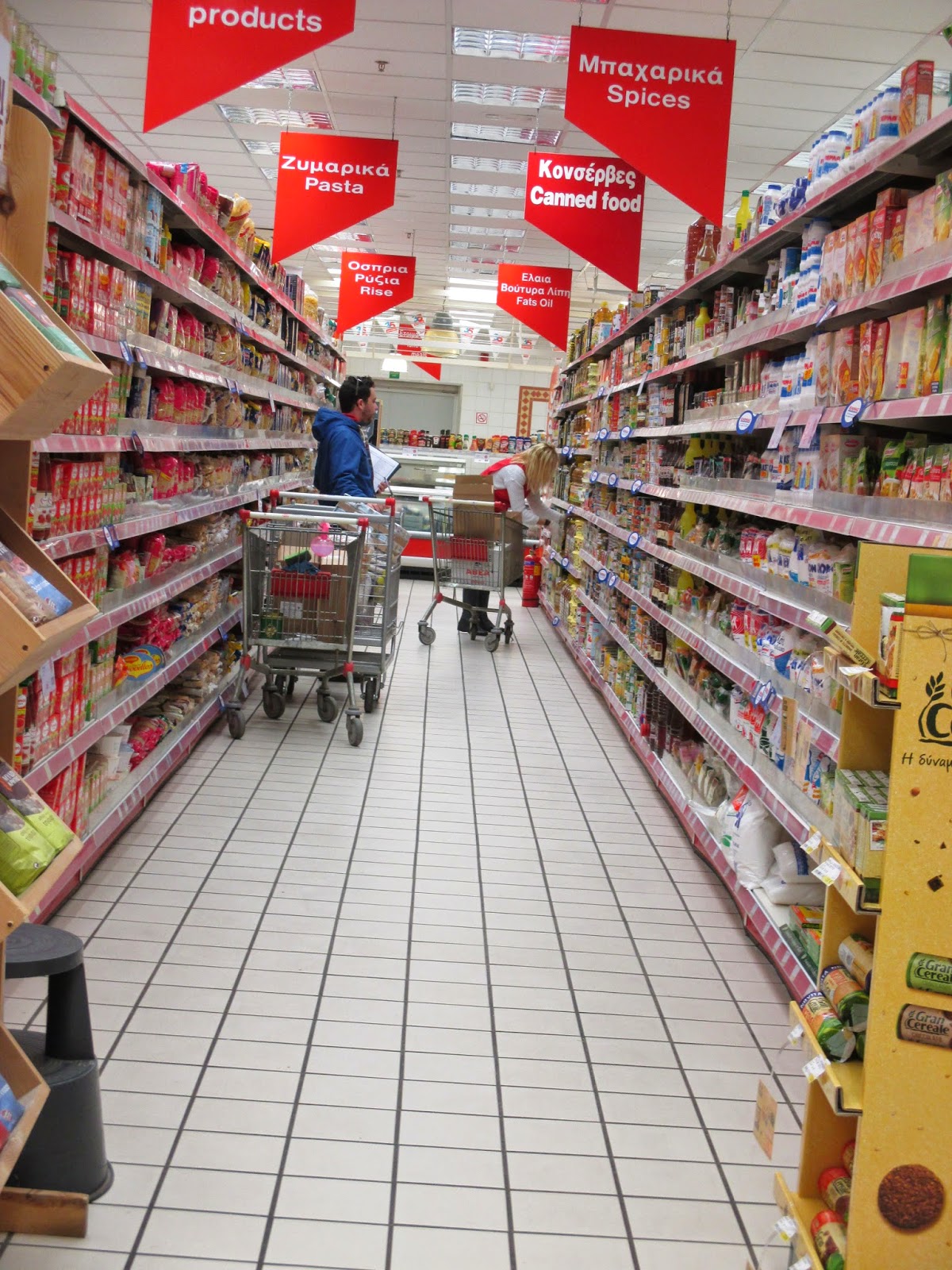
In the last
month or so, the likelihood of Greece leaving the Eurozone has moved up and
down along with hopes, varying between one in four and one in two, as far as
I’ve heard. This was part of the stomach-churning ride through the month, since
if Greece exited the Eurozone, life here would be even more difficult for some
(undetermined) time. One Greek father I talked with at our school’s pre-Lenten
carnival party seemed to believe leaving the euro would just mean some
confusion at the supermarket as Greece changed currencies again—how many
drachmas for this milk?--as if there would be no greater consequences in
everyday life. However—leaving aside what would happen to the rest of the European
and world economies, which are most people’s main concern, but not mine or
ordinary Greeks’—it looks like a Grexit would mean much more than that for
Greece.

Various
commentators suggest that newly printed drachmas would make Greeks’ money worth
much less than it was before, so that the price of imported goods, including
certain foods, petroleum, and medicines, would rise incredibly and even be
rationed and/or available only on the black market (The Grexit Dilemma: What Would Happen if Greece Leaves the Euro Zone? and Ending austerity in Greece: time for plan B?). It seems
quite likely that there would be high inflation and lower living standards, and
Spiegel also predicts many bankruptcies. Many expect “social unrest,” possibly
riots (e.g. Here's what happens if Greece is forced out of the euro). An increase in the already serious
brain drain would likely be accompanied by a worsening recession, although most
seem to think Greek tourism and exports would become more attractive due to
their cheaper costs, offering possible hope for the country’s economy—although
how much hope, how soon is unclear (see e.g. Grexit: How likely is a Greek exit from the Euro and what would happen to the economy?). Given such threats on top of years of recession
and 26% unemployment, it is unsurprising that a recent poll found 81% “in favor
of Greece staying in the euro, while only 15% prefer returning to the drachma”
(New Poll: SYRIZA has Comfortable Lead Over New Democracy).
For Now, Life Goes On

Since we
haven’t left the Eurozone so far, business and life carry on pretty much as
usual here—with the usual high unemployment, reduced salaries, pensions, and
benefits, and closed businesses, that is--even if we do wonder whether we’re
heading for a rollercoaster wreck. One hairdresser and mother of three hasn’t
even been following the news, but her customers,
like many others, seem to think things will stay about the same here. Some
hope for at least a bit of improvement; others don’t know what to think.
Everyone is just waiting to see what happens. Meanwhile, snow falls on the
mountains, rain falls near the coast, the sun comes out, the winds blow, and the
anemones, buttercups, almond blossoms, orchids, and daisies bloom. Students
head to school and after-school activities; those who still have jobs head to
work; adults find ways to take care of families, houses, laundry, cooking,
shopping, and errands.

I fight
with my dryer and dehumidifier daily, trying to convince it to work. A plumbing problem leaves us
with too little water to shower, run the washing machine, or even wash hands
and feet properly for a couple of days. Then the electricity blinks on and off,
so I scramble to unplug appliances lest more of them get fried to death as so
many already have here. I expected all the outages we had during the week of
our fiercest storms, particularly on one especially cold, windy, rainy/sleety
day, but not the blackouts of the calm, sunny day. I should know by now,
though, not to take electricity, water, or phone service for granted here. Even
within the Eurozone, life in Greece is no vacation.
Carnival Time: Let Them Eat Cake and Cheese Pies

In the
middle of last month, our school’s parents’ association organized its annual
pre-Lenten carnival party at a restaurant we took over for a few hours at
midday for a break from our rollercoaster of stress. There may have been a
slightly smaller crowd than in previous years, but parents provided all the
usual cheese pies, cakes, cookies, popcorn, sandwiches, and donuts. This year,
Zumba dancing was replaced by kung fu exhibitions, and the punches, kicks, blocks,
and turns of the more advanced kung fu students--especially the one with the
sword--impressed the watching parents and costumed children. Our instructor
inadvertently added extra drama to his routine with a long staff when he
shattered a large, globular glass light fixture above him; he joked that that
was a special effect until he learned that one little girl was cut by a stray
glass shard. After the glass was swept up, games began, with dozens of the
younger children holding a large colorful cloth they could lift into a balloon
or playing a “land/sea” game where they jumped to one side of a line or the
other as instructed, while older kids played their own games outside. Greek
dancing by everyone from kindergartners to grandmas followed, with many of the
children’s costumes beautifully complemented by the artistic face painting of a
white-faced mother in a Japanese kimono.

I didn’t
see as many vampire girls this year as last, but there was the usual contingent
of small princesses and Spider Men, my kids reported sighting a number of Darth
Vaders, and there was a variety of clowns, belles, Ninjas, and pirates male and
female, plus a female police officer with her face attractively (if
incongruously) painted half full of flowers and a lovely female Joseph (of the Technicolor Dream Coat, but in pharaoh
assistant garb) courtesy of last month’s musical. Unfortunately, the party,
like most events of its kind here, was a prime site for virus transmission—at
least, school absences and parents’ illnesses suggested as much the following
week.
Viruses, Sleet, Snow, Flowers and Compassion

The flu hit
Greece hard this year, along with a generous selection of additional viruses;
“olos o kosmos,” the whole world, was said to be sick here, and two neighbor
children were even hospitalized. A pharmacist’s assistant commented, “I don’t
want to attract the evil eye, but I haven’t gotten sick all winter,” and I
promptly knocked on wood, while the customer waiting behind me pretended to
spit to discourage the “evil eye” from destroying what it might view as too
much good luck: Ftuy Ftuy.

Right after
I told my cold, snowed-in American Facebook friends
that we don't have snow days in our part of Crete, I looked out the window and
was astonished to see a sleet storm. Just at the moment when school was letting
out, no less! My kids insisted that it was really snow—at least higher up the
hill at school—since they managed to collect enough from a corner to throw at
each other. Snow and sleet are always a surprise here near sea level, although
the Cretan mountains were hit by loads of snow last month, and a fair amount in
January. We managed to find a foot of mountain snow in mid-January, to the
kids’ and my delight, since we weren’t driving the car that slipped around on
the slushy, winding single-lane road. As the kids threw snow at each other and
D, I photographed a snowy mountainside punctuated by pointed rocks above us and
evergreens below, fading into the hills and the distant sea.

However—unlike us--many Americans got their fill
of snow this winter. I discovered that posting photos of Cretan winter flowers
is a better way to attract attention on Facebook than discussing the Greek
economy, Greek politics, or my Albanian friend Spressa’s brother Nikolaos, who
had emergency surgery for a duodenal perforation, a life-threatening complication of an ulcer in the
small intestine, here in Chania in January, and then needed treatment in an
Albanian hospital for an infection after he returned home. Thanks to the help
of some wonderful, compassionate family members, friends, and friends of
friends, we managed to raise enough money to cover Nikolaos’s Greek hospital
bills, which is important since Nikolaos is unemployed and uninsured, with no
savings or safety net. There are still Albanian hospital bills to pay, the
possibility of more tests and treatment in Greece, and food to buy for
Nikolaos’s five children. Could you contribute even a few dollars or euros to
help this unfortunate family? However much you may be struggling, I know they
are much worse off, financially, than most of the people who read this. Please
go to this site to learn more and help them, if you possibly can!


