Springtime in a Cretan December

Around our neighborhood in early December, days would go by when I
observed the same fuchsia bougainvillea hanging on at the end of the season,
the same palms, eucalyptus, and bright lemons or bitter oranges. (Another
ho-hum day in a botanist’s paradise.) Then suddenly I’d notice something
different—flowering thyme, the earliest anemones, new lavender like tiny, pale
green pine trees. One day I followed goat tracks up a hill full of hardy wild
shrubs to discover dozens of brilliant little purple and white saffron crocuses
with their golden stamens and crimson stigmata. The delicate blooms darkened in
the shadow of massive clouds that filled the sky almost up to where it met the
sea, but the blossoms lit up when the sun emerged.
In the warmest year on earth, as our planet heats up and El Niño returns, this Cretan December felt even more like spring than fall usually does here. Warm temperatures complemented the crocuses, daisies, early anemones, and undulating green and yellow carpets of sorrel beneath the olive trees. Tufts of new grass sprang up after the rain in muddy farmers’ lanes. The White Mountain peaks first saw snow in the middle of last month, missing their typical November appointment.
Holiday Bustle, Hope, and Charity
 Before the Christmas holidays, middle and upper class Greeks who still
had jobs dashed from work to school to pick up children, return home for a late
lunch, and shuttle the kids to their activities. Parents stopped at stores
decorated with garlands, tiny lights, paper snowflakes, and various sizes,
styles, and colors of Christmas trees for gifts and holiday treats. They whirled
from one party to another--parties organized by schools’ parents’ associations,
sports groups, music teachers, and the many Greeks celebrating their saints’
name days last month.
Before the Christmas holidays, middle and upper class Greeks who still
had jobs dashed from work to school to pick up children, return home for a late
lunch, and shuttle the kids to their activities. Parents stopped at stores
decorated with garlands, tiny lights, paper snowflakes, and various sizes,
styles, and colors of Christmas trees for gifts and holiday treats. They whirled
from one party to another--parties organized by schools’ parents’ associations,
sports groups, music teachers, and the many Greeks celebrating their saints’
name days last month.
Even so, Greeks could not help remembering that many here cannot buy
their children all the shoes, coats, and clothes some classmates have, let alone
pay for parties or gifts, because they have no job or too little income, cannot
pay their rent and bills, and may even be homeless. Unemployment continues to
hover around 25% after years of economic crisis and political and social
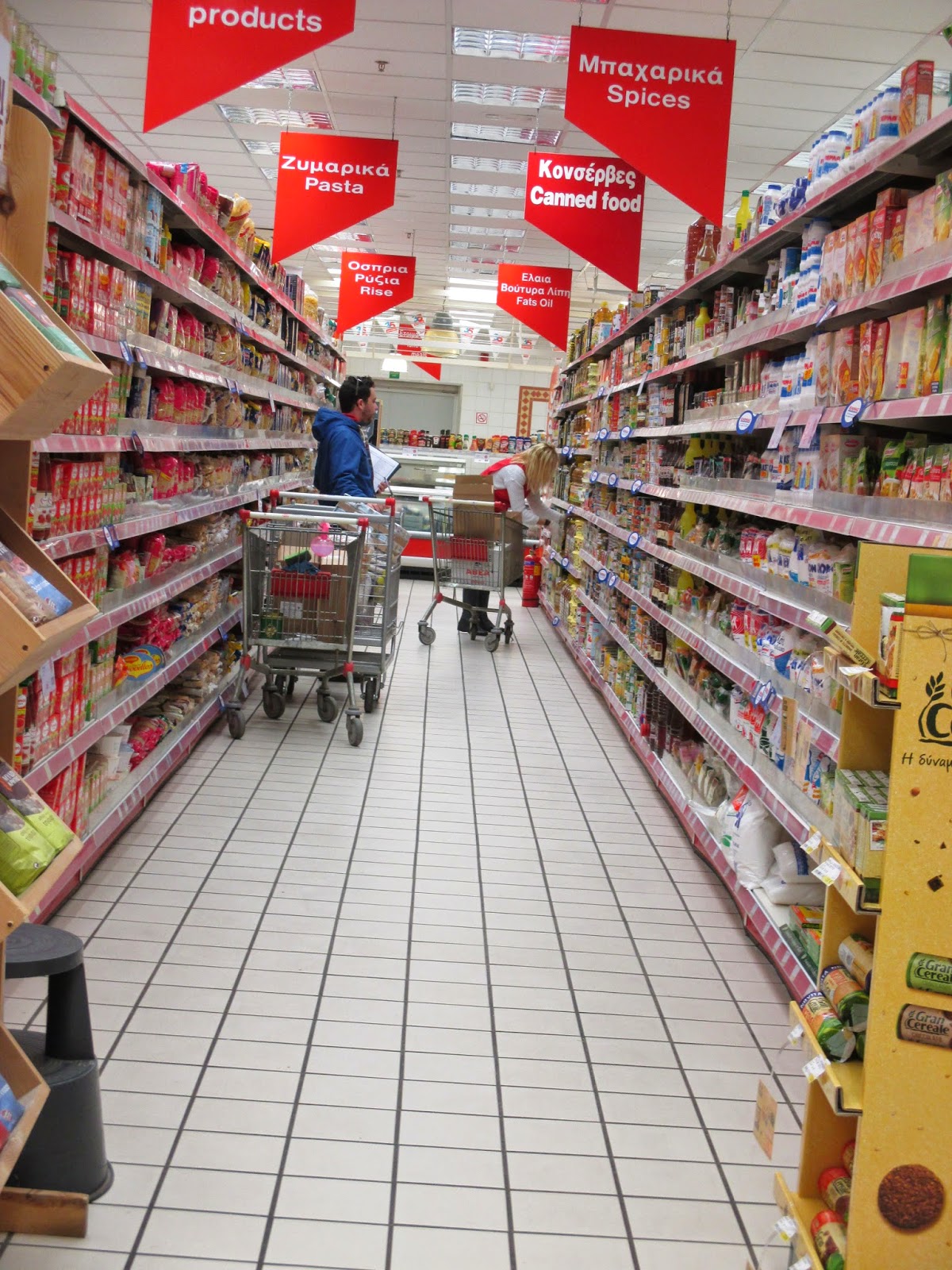
upheaval. All the supermarkets in our part of Crete long ago placed dishwasher
sized bins for donations of non-perishable items for the needy near the
checkout counters. Both of my children’s schools collected food for
impoverished people before the holidays. Women, children, and men wished us
happy holidays and a long life as they sought donations on city sidewalks and
outside suburban grocery stores. In Chania, Doctors of the World organized a
Christmas bazaar near the farmers’ market and set up a food drive in front of
downtown tourist shops, with a four-foot pile of condensed milk and other
canned goods attracting attention in front of tables with brochures and a
donation box.
 Perhaps Greeks, who are closer to financial disaster than many
Americans, need fewer reminders that scientific studies have linked “financial
generosity … to lower blood pressure,” so that for those who have extra, “spending
money on others may improve physical health.” Even for those who do not have
enough, “helping others may act as a buffer against the stresses of daily life,”
since “simply writing a supportive note to a friend can protect people from the
surge in blood pressure that typically occurs in the face of a stressful
event,” as the New York Times
recently reported (in Give, if You Know What’s
Good for You).
Perhaps Greeks, who are closer to financial disaster than many
Americans, need fewer reminders that scientific studies have linked “financial
generosity … to lower blood pressure,” so that for those who have extra, “spending
money on others may improve physical health.” Even for those who do not have
enough, “helping others may act as a buffer against the stresses of daily life,”
since “simply writing a supportive note to a friend can protect people from the
surge in blood pressure that typically occurs in the face of a stressful
event,” as the New York Times
recently reported (in Give, if You Know What’s
Good for You).
Many have been impressed by the generosity of ordinary Greeks toward
desperate refugees, even in the face of Greeks’ own economic struggles. One
empathetic, unemployed Greek PhD I know commented that “one thing poverty does
to you is to prevent you from helping others, and this is devastating more than
when you cannot help yourself.” Yet she and a friend managed to make some
winter hats for refugees—only to emphasize that she is one of hundreds involved
in grassroots efforts to knit or crochet winter hats for those who need them:
“I do not do anything special.”
Other efforts to help also stand out. The Press Project in Greece
selected Matina Katsivelis as their Person of the
Year for 2015 for her selfless, caring work to provide shelter for refugees
landing on the island of Leros, as well as necessities for those who end up on
Farmakonisi. She was recognized for her refusal to give up in the face of
difficulty and for remaining “in the line of action exactly where it counts
most; where the refugees arrive in their hundreds and thousands in rafts from
Turkey…. Keeping hope alive, and responding to plain necessity, she kept trying
to drain the sea of human suffering.” A moving interview with English subtitles
follows the article.
 Another noteworthy Greek venture led the Council of
Europe to award the 2016
Raoul Wallenberg Prize to Agalia, “a Greek NGO operating on the island of
Lesvos, for ‘outstanding achievements in providing frontline assistance to
thousands of refugees irrespective of their origin and religion.’” In Greek, “agalia” means “hug”--something many refugees appreciate,
as many volunteers’ experience shows. Grassroots endeavors to
compensate for the inadequacy of both Greek and international governmental
actions inspired a
petition to award the Nobel Prize to residents of Greek islands for their contribution
to the refugee crisis. I signed it today, adding to more than 110,845
signatures since November 16.
Another noteworthy Greek venture led the Council of
Europe to award the 2016
Raoul Wallenberg Prize to Agalia, “a Greek NGO operating on the island of
Lesvos, for ‘outstanding achievements in providing frontline assistance to
thousands of refugees irrespective of their origin and religion.’” In Greek, “agalia” means “hug”--something many refugees appreciate,
as many volunteers’ experience shows. Grassroots endeavors to
compensate for the inadequacy of both Greek and international governmental
actions inspired a
petition to award the Nobel Prize to residents of Greek islands for their contribution
to the refugee crisis. I signed it today, adding to more than 110,845
signatures since November 16.
Christmas Time in Athens

Outside the metro station in Monastiraki’s main square, several bunches
of Dora, Spongebob, princess, and Santa balloons rise above the crowds. Beyond
the carts offering bread rings, coconut, and chestnuts for sale, a young man
plays with fire that burns at the points of a four-foot wide star in the center
of a wide circle of onlookers. The tourist shops and souvlaki restaurants are
all open on the streets branching off from the square, although winter hats and
gloves have replaced summerwear, and icicle-type white Christmas lights hang
above the pedestrian crowds between the shops. Walking away from the square, we
can glimpse the Acropolis between the buildings.
On bustling Ermou Street en route to Syntagma (Constitution) Square,
street performers play instruments, sing, and present puppet shows as others
sell roasted chestnuts and corn on the cob outside chic stores. The biggest
audience is drawn to four young musicians who play acoustic guitar and
violin and sing familiar Greek songs as listeners clap, sing along, or—in the
case of one white-haired woman--come forward with arms raised for a short,
impromptu dance. On
another street, Attica department store’s famous window displays mix Santa with
black-clad mannikins in puffy white hair.
 Next to the Parliament building at Syntagma Square, cars zoom beneath
strings of white star lights. This year’s Syntagma display features a giant
artificial tree, plus strings of white lights, blue stars, and white balls
haphazardly strung all over the real trees, in a possibly halfhearted attempt
at festivity. In the center of the square, crowds mill around by a fountain
lit, like the Grande Bretagne Hotel, by lights of changing colors. Santas
gather with Micky Mouse for photos with children, and tired migrants sell
balloon swords and hearts for whatever we wish to pay. A full moon rises above
Parliament. Athens does not look as festive this year as it has in recent
years, even during the crisis: there are fewer Christmas lights and outdoor children’s
events.
Next to the Parliament building at Syntagma Square, cars zoom beneath
strings of white star lights. This year’s Syntagma display features a giant
artificial tree, plus strings of white lights, blue stars, and white balls
haphazardly strung all over the real trees, in a possibly halfhearted attempt
at festivity. In the center of the square, crowds mill around by a fountain
lit, like the Grande Bretagne Hotel, by lights of changing colors. Santas
gather with Micky Mouse for photos with children, and tired migrants sell
balloon swords and hearts for whatever we wish to pay. A full moon rises above
Parliament. Athens does not look as festive this year as it has in recent
years, even during the crisis: there are fewer Christmas lights and outdoor children’s
events. On Christmas day, a migrant drummer and clarinetist on a suburban street play Greek carols as an associate seeks contributions. One of the musicians agrees to a photo, but the other keeps his back to me. Young migrant men sell roses and balloons in downtown Athens, and older women sell evergreen and holly branches all around the capital. A sidewalk sale offers a gorgeous selection of pink and red cyclamen and hearty red poinsettias that grow into trees here if planted in the ground. Bakeries display neat pyramids of kourambiedes covered in snowy powdered sugar beside heaps of spicy brown melomakarona that have been saturated with honey. Rows of New Year’s cakes or vasilopites line shelves next to a variety of breads. A father and daughter go caroling in matching Santa (or Agios Vasilis) costumes. But it’s not the most wonderful time of year for everyone, whatever the TV song may say. Fireworks exploding over the Acropolis for the New Year create a striking picture but last for a very short time.
It’s Not All Merry and Bright
 On sidewalks and trains all around Athens, women, children, and men
appeal for money to stave off their hunger. The cold snap that reduced
temperatures to around freezing just before New Year’s sent them in search of
the warmth that makeshift cardboard shelters rigged up on park benches could
hardly provide in a sharp northerly wind. If only I could have remembered where
the government had opened warm shelters, I would have told the homeless men I
saw, but I’d just read about that in the comfort of a warm, dry house and
forgotten the details.
On sidewalks and trains all around Athens, women, children, and men
appeal for money to stave off their hunger. The cold snap that reduced
temperatures to around freezing just before New Year’s sent them in search of
the warmth that makeshift cardboard shelters rigged up on park benches could
hardly provide in a sharp northerly wind. If only I could have remembered where
the government had opened warm shelters, I would have told the homeless men I
saw, but I’d just read about that in the comfort of a warm, dry house and
forgotten the details.I am not sure whether one taxi driver in Athens really has two master’s degrees and don’t know if he speaks six languages, as he claims, but that could be true. It is quite possible that another man has a university degree in finance but can now find work only as a taxi driver, as a friend who used to work in a bank must now drive a city bus. And I do know what three other Greek friends have been reduced to doing, in spite of many years of training and experience. They gave me permission to share their stories, using pseudonyms to protect their privacy.

Vasilis earned a
degree as a ship mechanic at a technical college in Piraeus and worked on ships
full time for 15 years. Last year he worked just 43 days. He would have worked
even less if he hadn’t been a friend of the head engineer who arranges for
contract work on ships. People like Vasilis have been able to earn very little in
recent years, since Greek shipyards started closing down after the government
agreed to reduce ship construction to let Germany and Italy’s industries
develop back in the 1990s, and ship
owners have sought cheaper labor abroad during the economic downturn. This has left many families lacking even one wage earner, and
increasing numbers malnourished
and dependent on the free clinics of Doctors of the World for their healthcare.
Since 2004, Vasilis has worked when and where he could, with only one job
lasting as long as 18 months.
Generally, Vasilis explained, Greeks must work
at least 50 days a year in order to be eligible for IKA, the
government-sponsored health insurance. Some years, exceptions were made due to
the lack of jobs; other years, there was no exception. To get unemployment
benefits for one year, Vasilis told me, one must have worked at least 250 days
the previous year. After one year of benefits, the unemployed must wait two
years and work at least 250 days in a year for another year of benefits. This
is difficult since unemployment still stands around 25% nationwide, and there
are almost no jobs for shipyard workers. In Perama, which has been largely
dependent on shipyards, there was 60% unemployment--95% among shipyard
workers--in 2014, since shipbuilding “is now being outsourced to shipyards in
China, Korea and Turkey, where labor costs are much lower and minimally
regulated,” according to the International
Business Times.
Vasilis last received unemployment benefits in
2011. Now only his youngest son is able to work full time in an effort to support
their family of four. A college graduate, this son works six days a week for
500 euros a month, or about 2.60 euros an hour. Compare that with the $15
minimum wage discussed in the U.S. Yes, some things cost less here in Greece,
but others—including taxes—cost more. And so many families are supported by just
one job or pension, however much--or little--that may bring in.

My friend Eleni is struggling with underpaid underemployment that creates
serious financial difficulties. Her husband’s pension has been cut like
everyone else’s, her own income reduced to just 250 euros a month for teaching
two college classes and writing 200 pages of notes for her students every six
months (a book’s worth). So they need to say “next year” to their young son,
who wants to rent toy cars, go on rides, and buy ice cream during a holiday
outing focused on a playground and a stroll by the sea, since those are still
free. A professor with a PhD and 25 years of experience, Eleni feels like she
has lost her professional identity. She wonders if she can call herself a
professor—or what?
Eleni is afraid she will lose her apartment since she cannot make her
mortgage payments. She blames the world’s major powers for bombarding some
countries and destroying others—such as Greece--economically. Feeling like “a
refugee in my own country,” she acknowledges, “certainly it is worse to bomb
your country, but it's also bad not to have a future,” not to have one’s
choices respected, not to have dignity, as the increased numbers of suicides in
Greece during the crisis seem to emphasize. “It’s like a war,” Eleni says. Like
many, she believes the major powers are using austerity measures and the third
memorandum of agreement to turn people against the leftist government so it
will fall. (Others argue that powerful nations approve of this government now
that it follows their directions.) Yet Eleni realizes that “there are worse
cases” than hers and adds, “Maybe I should not complain, after all.”
Another friend, Katerina, has a PhD and two other postgraduate degrees,
fluency in four languages aside from Greek, plus multiple publications and
talents, but after 197 applications for jobs, postdoctoral research positions,
and fellowships in various countries, still no luck! She has given up on Greek
universities and institutes, which are not hiring for permanent positions or
paying part-timers on time, if they hire at all. Katerina points out that “it
is one thing to become an expatriate because of better career prospects abroad,
and another thing to become a migrant (or refugee) because you cannot live in
your own country. This is the situation for many Greek people. I am still lucky
because with a good education I have some chances for a good job in a sector I
like abroad, if I ever find it. Other people do not have even those chances.”
Fully aware of the plight of non-Greek refugees and other unemployed Greeks,
she feels grateful to have managed to travel, do interesting research, and
continue some of the artistic activities she enjoys in recent years, due to
“the class privilege that I had by birth, which still gives returns.” She
considers herself “privileged in comparison to other people,” such as women
without a university degree who must “try to cope with the situation with even
less means and perhaps less hope.”

Katerina has joined many well-educated offspring of middle-class
families in applying for jobs for which she is vastly overqualified, for
example at translation agencies and a cruise ship company—and still has found
no long-term work. Without a steadily paying job for many years, she feels that
she is “currently in such a dire situation that you cannot imagine,” struggling
to cover basic expenses and lacking access to the public healthcare system for
six years. Katerina feels fortunate that she still has electricity and running
water, enough blankets and clothes, and “some food.” But after spells of
poverty during the last 15 years, she knows very well that with very low and
unsteady income, however wisely one manages money, it may not be possible to
avoid a worse situation. As Katerina and Eleni remind me, many of the women and
men now standing in line at soup kitchens, sleeping in the streets, and seeking
clothing from churches and other groups in Greece are well-educated people who
once felt securely rooted in a middle class life like mine. But as Eleni points
out, they “lost their house, their job, their dignity.”
It is Epiphany today. The schools and stores in Greece are all closed as
hardy swimmers “dive into the sea to retrieve a wooden crucifix” and Greek
President Prokopis Pavlopoulos calls for “the light to smash the darkness of
poverty” (Epiphany
celebrations in Athens). Hear, hear. May the New Year bring new hope and
opportunities to all who need them.Acknowledgements:
Many thanks to the friends who agreed to share their stories with me in order to help others better understand the situation in Greece. Thanks also to Doctors of the World and all the other volunteers who have done so much to help impoverished Greeks and needy refugees.